Sunday, 29 June 2025

Python Coding Challange - Question with Answer (01300625)


Explanation:

  1. x = 5
    → We assign the value 5 to the variable x.

  2. if x > 2:
    → Since x = 5, this condition is True, so we enter the first if block.

  3. Inside that block:


    if x < 4:
    print("Low")

    → This is False because 5 < 4 is not true. So this block is skipped.

  4. Next:


    elif x == 5:
    print("Exact")

    → This is True because x = 5.
    → So "Exact" gets printed.


Final Output:


Exact

Digital Image Processing using Python

https://pythonclcoding.gumroad.com/l/oxdsvy


Statistics 101 – Free Beginner Course by Cognitive Class (IBM)


Want to build a strong foundation in statistics—the backbone of data science, machine learning, and analytics?

The Statistics 101 course from Cognitive Class, developed by IBM, is the perfect starting point. Whether you're a student, professional, or data enthusiast, this course will help you understand data at a deeper level — and best of all, it’s completely free!


๐Ÿ“˜ Course Overview

This self-paced, beginner-friendly course is designed to teach you the fundamentals of statistics from the ground up. No prior knowledge required!

๐Ÿ”น Platform: Cognitive Class (IBM)
๐Ÿ”น Level: Beginner
๐Ÿ”น Duration: ~12–15 hours
๐Ÿ”น Cost: 100% Free
๐Ÿ”น Certificate: Yes (IBM Verified)


๐Ÿง  What You’ll Learn

The course offers a clear and concise introduction to key statistical concepts, using simple examples and easy-to-follow lessons.

๐Ÿ“Œ 1. Introduction to Statistics

  • What is statistics?

  • Importance of statistics in the real world

  • Populations vs. samples

๐Ÿ“Œ 2. Types of Data

  • Categorical vs. numerical data

  • Discrete vs. continuous variables

  • Levels of measurement (nominal, ordinal, interval, ratio)

๐Ÿ“Œ 3. Data Summarization

  • Measures of central tendency: mean, median, mode

  • Measures of dispersion: range, variance, standard deviation

  • Frequency tables and distributions

๐Ÿ“Œ 4. Data Visualization

  • Histograms, pie charts, box plots

  • Interpreting visual data

  • Identifying outliers

๐Ÿ“Œ 5. Probability Basics

  • Probability theory in simple terms

  • Events, outcomes, and sample spaces

  • Basic probability rules

๐Ÿ“Œ 6. Introduction to Inferential Statistics

  • What is inference?

  • Confidence intervals

  • Hypothesis testing (conceptual level)


๐Ÿ“ˆ Why Take This Course?

No prior knowledge required
Perfect for data science & analytics beginners
Taught by IBM experts
Includes quizzes & hands-on examples
Earn a free, shareable IBM certificate


๐Ÿ… Certificate of Completion

At the end of the course, you’ll receive a digital certificate issued by IBM — great for your resume, LinkedIn profile, or student portfolio.


๐Ÿ’ฌ Student Feedback

“I finally understand what standard deviation really means. This course made stats simple!”

“A great crash course on the concepts every data professional should know.”


๐Ÿ“Œ Who Should Enroll?

  • Students new to data science, business, or research

  • Professionals looking to refresh core statistical concepts

  • Anyone interested in understanding data better


๐Ÿš€ How to Enroll

  1. Go to ๐Ÿ‘‰ https://cognitiveclass.ai/courses/statistics-101

  2. Sign up for a free account

  3. Enroll and start learning at your own pace!


✍ Final Thoughts

Whether you're planning to become a data scientist, exploring machine learning, or just want to become more data-literate, statistics is your essential first step.

The Statistics 101 course by Cognitive Class (IBM) is free, accessible, and certified — making it the ideal way to get started.


Data Visualization with Python – Free Course by Cognitive Class (IBM)


Are you ready to turn raw data into compelling visual stories?

The Data Visualization with Python course offered by Cognitive Class (an initiative by IBM) is a beginner-friendly, hands-on course that teaches you how to create stunning and insightful visualizations using Python — and it’s completely FREE.


๐Ÿงพ Course Overview

Data visualization is one of the most important skills in data science, analytics, and business intelligence. This course walks you through the fundamentals and advanced techniques using popular Python libraries like Matplotlib, Seaborn, and Folium.

๐Ÿ”น Platform: Cognitive Class (by IBM)
๐Ÿ”น Level: Beginner to Intermediate
๐Ÿ”น Duration: ~15 hours
๐Ÿ”น Cost: Free
๐Ÿ”น Certificate: Yes, from IBM


๐Ÿ“š What You’ll Learn

This course is packed with interactive lessons, real datasets, and practical labs to help you visualize data like a pro.

๐Ÿ“Œ 1. Introduction to Data Visualization

  • What is data visualization?

  • Why visualization matters in data science

  • Types of charts and when to use them

๐Ÿ“Œ 2. Basic Graphs with Matplotlib

  • Line plots, bar charts, pie charts, histograms

  • Plot customization: labels, legends, colors, styles

๐Ÿ“Œ 3. Advanced Graphs with Seaborn

  • Creating beautiful statistical plots

  • Box plots, violin plots, swarm plots

  • Heatmaps and pair plots

๐Ÿ“Œ 4. Interactive Maps with Folium

  • Visualizing geographic data

  • Plotting location data on maps

  • Adding markers, choropleths, and popups

๐Ÿ“Œ 5. Creating Dashboards

  • Combining multiple plots

  • Creating storytelling visuals

  • Best practices for layout and design


๐Ÿ› ️ Tools & Libraries Used

  • Matplotlib – Core plotting library

  • Seaborn – High-level statistical graphics

  • Folium – For interactive leaflet maps

  • Pandas – For data manipulation

  • Jupyter Notebooks – For hands-on practice


๐Ÿง  Why Take This Course?

Real-world Datasets – Analyze global economic trends, population, crime stats, and more
Hands-on Labs – Learn by doing inside your browser
No Prior Data Viz Knowledge Needed
Earn a Verified Certificate by IBM
Completely Free


๐Ÿ† Certificate of Completion

At the end of the course, you can earn an IBM-recognized certificate to showcase your skills on LinkedIn, GitHub, or your portfolio.


๐Ÿ’ฌ Student Testimonials

"I never thought visualizing data could be this exciting. This course made it simple and fun!"

"Now I can create compelling charts and dashboards for my reports at work. Thank you, IBM!"


๐Ÿ“ Who Should Enroll?

  • Beginners in data science or analytics

  • Business analysts looking to improve presentations

  • Students and professionals curious about data storytelling


๐Ÿ”— How to Enroll

๐ŸŽฏ Visit the course page:
๐Ÿ‘‰ https://cognitiveclass.ai/courses/data-visualization-python

๐Ÿ†“ Sign up with a free account and start learning instantly!


✍ Final Thoughts

In the era of data overload, the ability to tell clear, concise, and compelling visual stories is a superpower.

The Data Visualization with Python course by IBM via Cognitive Class is the perfect first step toward mastering this skill — whether you're in business, data science, or just curious.

It’s interactive, hands-on, project-based, and 100% free.


Data Analysis with Python – Free Course by Cognitive Class (IBM)


Want to master data analysis using Python? Whether you're an aspiring data analyst, data scientist, or simply curious about data-driven decision making, the Data Analysis with Python course by Cognitive Class (by IBM) is a must-try — and it’s 100% FREE!


๐Ÿงพ Course Overview

This self-paced course focuses on teaching you how to analyze data using the most popular Python libraries — like Pandas, Numpy, and Scipy — and visualize data using Matplotlib, Seaborn, and Folium.

๐Ÿ”น Platform: Cognitive Class (by IBM)
๐Ÿ”น Difficulty: Intermediate
๐Ÿ”น Duration: ~20 hours
๐Ÿ”น Cost: Free
๐Ÿ”น Certificate: Yes, from IBM


๐Ÿ“š What You’ll Learn

The course is well-structured into several modules that walk you through everything from importing data to building regression models.

๐Ÿ”น 1. Importing Datasets

  • Reading data from different file types (CSV, Excel, SQL)

  • Exploring and cleaning datasets using Pandas

๐Ÿ”น 2. Data Wrangling

  • Identifying and handling missing values

  • Data formatting and normalization

  • Binning and indicator variables

๐Ÿ”น 3. Exploratory Data Analysis (EDA)

  • Grouping, pivoting, and summarizing data

  • Detecting outliers and understanding distributions

  • Using boxplots, histograms, and scatter plots

๐Ÿ”น 4. Model Development

  • Introduction to machine learning models

  • Linear regression and multiple regression

  • Model evaluation metrics (MAE, MSE, R²)

๐Ÿ”น 5. Model Evaluation and Refinement

  • Splitting data into training and testing sets

  • Cross-validation and ridge regression

  • Refining models for better accuracy


๐Ÿ“ˆ Tools & Libraries Covered

  • Pandas – For data manipulation

  • NumPy – For numerical operations

  • Matplotlib & Seaborn – For visualization

  • Scikit-learn – For model building

  • Statsmodels, Folium, and more


๐ŸŽ“ Certificate of Completion

Complete the course and receive a verified certificate by IBM – a great way to validate your skills and showcase them on LinkedIn or your resume.


✅ Why Take This Course?

Practical & Project-Based
Hands-on Labs with Jupyter Notebooks
Real-world datasets used in analysis
Recognized IBM certificate
Absolutely Free! No hidden costs


๐Ÿ’ฌ Learner Reviews

“I finally understand how to clean, analyze, and visualize data. The concepts were easy to grasp with examples that felt real.”

“This course helped me get my first freelance data analysis project!”


๐Ÿš€ Who Should Take This?

  • Data science and AI beginners

  • Business analysts & engineers

  • Anyone who has basic Python knowledge and wants to apply it to real-world datasets


๐Ÿ”— How to Enroll

๐Ÿ‘‰ Visit: https://cognitiveclass.ai/courses/data-analysis-python
๐Ÿ‘‰ Sign up for a free account
๐Ÿ‘‰ Enroll and start learning today!


✍ Final Thoughts

Data is the new oil, and this course teaches you how to refine it!

Whether you're aiming for a career in data science, improving your current job skills, or just exploring the data world out of curiosity, the Data Analysis with Python course is a perfect launchpad.

Offered by IBM, backed by practical labs, and 100% free — there’s no reason to wait.

Python for Data Science – Free Course by Cognitive Class (IBM)


Are you looking to kickstart your Data Science journey with Python?

Look no further! The Python for Data Science course by Cognitive Class, an IBM initiative, is one of the best free learning resources available for beginners and aspiring data scientists.


๐Ÿ“˜ Course Overview

This self-paced course introduces you to the fundamentals of Python programming with a strong emphasis on its application in data science.

๐Ÿ”น Platform: Cognitive Class (by IBM)
๐Ÿ”น Level: Beginner
๐Ÿ”น Duration: ~15 hours
๐Ÿ”น Cost: FREE
๐Ÿ”น Certificate: Yes, after completion


๐Ÿ” What You’ll Learn

The course is thoughtfully divided into five modules, each building a strong foundation for data science applications using Python:

1. Introduction to Python

  • Why Python is popular in Data Science

  • Installation and setup (Anaconda, Jupyter Notebooks)

  • Writing your first Python program

2. Python Basics

  • Variables and data types

  • Expressions and operators

  • String operations

  • Working with lists, tuples, and dictionaries

3. Python Data Structures

  • Creating and modifying lists and dictionaries

  • Nesting and indexing

  • Practical use cases in Data Science

4. Working with Data in Python

  • Reading and writing files

  • Introduction to Pandas for data manipulation

  • Loading datasets, filtering, and summarizing data

5. Data Visualization

  • Using Matplotlib and Seaborn

  • Creating line plots, bar charts, scatter plots

  • Visualizing real-world datasets


๐Ÿง  Why You Should Take This Course

Beginner-Friendly: No prior programming experience required
Hands-On Labs: Learn by doing with Jupyter Notebooks
Real-World Examples: Practical applications of Python in data analysis
Free Certification: Great for your resume and LinkedIn
Offered by IBM: Recognized and trusted globally


๐Ÿ† Certificate of Completion

Upon passing the quizzes and final exam, you’ll receive a verified certificate from IBM through Cognitive Class — a valuable addition to your data science portfolio.


๐Ÿ’ฌ Student Feedback

"This is the perfect course to start your Python and Data Science journey. Everything is clearly explained, and the labs make learning fun!"

"Thanks to this course, I cracked my first Data Analyst internship."


๐Ÿ“Œ How to Enroll

  1. Visit: https://cognitiveclass.ai/courses/python-for-data-science

  2. Sign up for a free account

  3. Enroll and start learning at your own pace


✍️ Final Thoughts

The Python for Data Science course by IBM’s Cognitive Class is more than just an introduction — it’s your first real step into the world of data analysis, machine learning, and artificial intelligence.

Whether you’re a student, professional, or curious learner, this course will give you the confidence to code with Python and explore the fascinating field of Data Science.


๐Ÿ”— Start learning now:
๐Ÿ‘‰ https://cognitiveclass.ai/courses/python-for-data-science

Python Coding Challange - Question with Answer (01290625)


Loop Range:


for i in range(1, 6)

This means i will go through the numbers:
1, 2, 3, 4, 5


Now, check each value of i:

➤ i = 1

  • 1 % 2 == 0 → ❌ False → does not continue

  • i == 5 → ❌ False → does not break
    ✅ print(1, end=" ") → prints 1

➤ i = 2

  • 2 % 2 == 0 → ✅ True → continue (skips the rest of loop)
    ❌ Nothing is printed.

➤ i = 3

  • 3 % 2 == 0 → ❌ False

  • i == 5 → ❌ False
    ✅ print(3, end=" ") → prints 3

➤ i = 4

  • 4 % 2 == 0 → ✅ True → continue
    ❌ Nothing is printed.

➤ i = 5

  • 5 % 2 == 0 → ❌ False

  • i == 5 → ✅ True → break
     Loop stops before printing 5


Final Output:

1 3

Summary:

  • Skips even numbers using continue

  • Stops the loop when i is 5 using break

  • Only odd numbers less than 5 get printed

Digital Image Processing using Python

https://pythonclcoding.gumroad.com/l/oxdsvy

Python Coding challenge - Day 578| What is the output of the following Python Code?


 Code Explanation:

1. Function Definition
def extend_list(val, list=None):
def is used to define a function named extend_list.
The function takes two parameters:
val: the value to be added to the list.
list: an optional parameter. If not provided, it defaults to None.
Using None as a default is a common Python practice to avoid mutable default arguments (like lists).

2. Handling the Default Argument
    if list is None:
        list = []
This block checks if list was provided.
If not (i.e., list is None), it creates a new empty list.
This ensures that a new list is created every time the function is called without an explicit list, avoiding shared state across calls.

3. Appending the Value
    list.append(val)
Adds the val to the list using the append() method.
This modifies the list in place.

4. Returning the Result
    return list
Returns the updated list containing the newly added value.

5. First Function Call
print(extend_list(10))
Calls extend_list with val = 10 and no list argument.
Since no list is provided, a new list is created: []
10 is appended: [10]
Output: "[10]"

6. Second Function Call
print(extend_list(20))
Calls extend_list again, this time with val = 20, still with no list argument.
Again, since no list is provided, a new empty list is created.
20 is appended: [20]
Output: "[20]"

Final Output:
[10]
[20]

Python Coding challenge - Day 579| What is the output of the following Python Code?


Code Explanation:

1. Function Definition
def func(a, L=[]):
A function named func is defined.
It takes two parameters:
a: a number (likely an integer).
L: a list with a default value of an empty list [].

2. Loop to Append Values
    for i in range(a):
        L.append(i)
A for loop runs from i = 0 to i = a - 1.
Each i is appended to the list L.

3. Return the List
    return L
After the loop, the modified list L is returned.

4. First Function Call
print(func(2))
a = 2, default L = [] (the empty list defined once at function creation).
Loop: i = 0, 1 → L becomes [0, 1]
Output: [0, 1]

5. Second Function Call
print(func(3))
a = 3, but now the default list L is not empty—it's [0, 1] from the previous call.
Loop: i = 0, 1, 2 → Append to existing list → L becomes [0, 1, 0, 1, 2]
Output: [0, 1, 0, 1, 2]

Final Output
[0, 1]
[0, 1, 0, 1, 2]

Download Book - 500 Days Python Coding Challenges with Explanation

Saturday, 28 June 2025

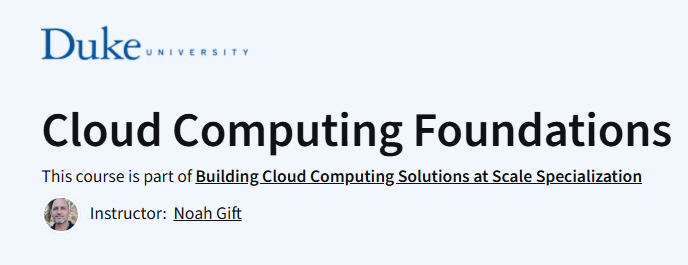
Cloud Computing Foundations


There are 5 modules in this course

Welcome to the first course in the Building Cloud Computing Solutions at Scale Specialization! In this course, you will learn how to build foundational Cloud computing infrastructure, including websites involving serverless technology and virtual machines. You will also learn how to apply Agile software development techniques to projects which will be useful in building portfolio projects and global-scale Cloud infrastructures. 

This course is ideal for beginners as well as intermediate students interested in applying Cloud computing to data science, machine learning and data engineering. Students should have beginner level Linux and intermediate level Python skills. For your project in this course, you will build a statically hosted website using the Hugo framework, AWS Code Pipelines, AWS S3 and GitHub.

Join Now : Cloud Computing Foundations

Free Courses : Cloud Computing Foundations

Applying AI Principles with Google Cloud


What you'll learn

Explain the business case for responsible AI.

Identify ethical considerations with AI using issue spotting best practices.

Describe how Google developed and put their AI Principles into practice and leverage their lessons learned.

Adopt a framework for how to operationalize responsible AI in your organization.

Join Now : Applying AI Principles with Google Cloud

Free Courses : Applying AI Principles with Google Cloud

There are 7 modules in this course

This course, Responsible AI: Applying AI Principles with Google Cloud - Locales, is intended for non-English learners. If you want to take this course in English, please enroll in Responsible AI: Applying AI Principles with Google Cloud.

As the use of enterprise Artificial Intelligence and Machine Learning continues to grow, so too does the importance of building it responsibly. A challenge for many is that talking about responsible AI can be easier than putting it into practice. If you’re interested in learning how to operationalize responsible AI in your organization, this course is for you. 

In this course, you will learn how Google Cloud does this today, together with best practices and lessons learned, to serve as a framework for you to build your own responsible AI approach.

Python Coding Challange - Question with Answer (01280625)


Explanation:

  • [] is an empty list.

  • for i in []: means "loop over each item in the list".

  • But since the list is empty, there are no items to iterate over.

  • So, the loop body (print("Hello")) never executes.

What happens?

  • Nothing is printed.

  • No errors occur.

  • The loop just skips execution entirely.

 Summary:

The code runs silently and produces no output.

✅ Output:


(no output)

BIOMEDICAL DATA ANALYSIS WITH PYTHON

https://pythonclcoding.gumroad.com/l/tdmnq

Book Review: Think Stats (3rd Edition) by Allen B. Downey (Free Book)


A Practical Guide to Probability and Statistics for Programmers and Data Scientists


Overview

Think Stats, 3rd Edition is not your typical statistics textbook. Written by Allen B. Downey—respected computer scientist and educator—the book provides a practical, programming-first introduction to statistical thinking using Python.

This edition is thoroughly updated for Python 3.10+, Pandas, and modern data analysis practices, making it a go-to resource for beginners looking to master statistics from the ground up using real-world data.


Who is this book for?

  • Beginner to intermediate Python programmers

  • Aspiring data scientists

  • Students pursuing statistics or machine learning

  • Readers who prefer hands-on learning through code over theory-heavy books


Key Features

✅ 1. Programming-Centric Approach

Unlike traditional stat books, Think Stats introduces concepts through Python code. You’ll learn to:

  • Clean, explore, and visualize data using Pandas and Matplotlib

  • Understand distributions, probability, and hypothesis testing

  • Model real-world phenomena through simulation

✅ 2. Real Datasets

Each chapter uses authentic datasets, such as:

  • The National Survey of Family Growth (NSFG)

  • Other large-scale, publicly available survey data

This approach makes learning engaging and relevant, with exercises rooted in reality.

✅ 3. Deep Dive into Core Concepts

The book covers:

  • Descriptive statistics

  • Probability distributions

  • Statistical testing (t-tests, p-values)

  • Estimation and confidence intervals

  • Regression analysis

  • Bayesian inference basics

✅ 4. Free and Open Source

Think Stats is freely available under a Creative Commons license. That means:

  • You can read it online or download the PDF

  • You can reproduce and modify the code and exercises

  • Perfect for self-learners or educators


What’s New in the 3rd Edition?

  • Updated for modern Python environments

  • Refined examples with clearer, cleaner code

  • Integration with the EmpiricalDist module for probability distributions

  • Expanded exercises to reinforce each concept

  • Improved explanations for readers without a math background


Why Should You Read It?

If you want to:

  • Understand statistics by writing code

  • Build intuition about probability, distributions, and statistical testing

  • Use Python as a tool to explore and communicate data stories
    …then Think Stats is your ideal companion.

It’s less about formulas and more about thinking statistically in real-world situations.


Favorite Quote

“The best way to learn statistics is to do statistics.”

And that’s the motto Think Stats lives by.


Final Verdict

⭐️⭐️⭐️⭐️⭐️ (5/5)

Think Stats (3rd Edition) is accessible, code-driven, and practical—a perfect gateway for anyone interested in data science, especially those with a programming mindset.

Whether you're prepping for a data science interview or exploring statistics for fun, this book will give you the foundation to think statistically with confidence.


๐Ÿ“ฅ Get the Book

You can download or read the book here: Think Stats (3rd Edition) by Allen B. Downey


Hard Copy: Think Stats: Exploratory Data Analysis

Book Review: Generative AI with Python and PyTorch (2nd Edition)


Book Review: Generative AI with Python and PyTorch (2nd Edition)

By Joseph Babcock & Raghav Bali

Rating: ⭐⭐⭐⭐⭐ (5/5)
Ideal For: Data scientists, machine learning engineers, and developers diving into the world of LLMs, GANs, VAEs, and diffusion models.


Overview

Generative AI with Python and PyTorch (2nd Edition) is a comprehensive and hands-on guide for anyone looking to master the latest in generative artificial intelligence. Whether you're exploring text generation with LLMs or creating images using GANs and diffusion models, this book equips you with the tools, theory, and practical skills to bring your AI ideas to life.

Authored by Joseph Babcock, a machine learning PhD, and Raghav Bali, a seasoned data scientist with patents in AI, the book reflects their real-world experience, blending technical depth with application-first learning.


What You'll Learn

This book dives deep into cutting-edge GenAI topics, offering clarity on:

  • LLMs and Transformers: Understand how models like GPT-4 and Llama revolutionize NLP.

  • Prompt Engineering: Learn advanced techniques like ReAct, Chain-of-Thought, and Prompt Query Language.

  • Diffusion Models & AI Art: Go beyond GANs and generate images using state-of-the-art methods like CLIP and Stable Diffusion.

  • LLM Optimization: Apply LoRA, PEFT, and RLHF to fine-tune and optimize large models.

  • Tooling Up: Build powerful pipelines using LangChain, RAG, and LlamaIndex for real-world deployment.


Highlights from the Table of Contents

  • ๐Ÿ“Œ Introduction to Generative AI: A solid grounding in how generative models work.

  • ๐Ÿงฑ Building Blocks of Deep Neural Networks: A must-read refresher or starter.

  • ✍️ Text Generation with LLMs: Covers both classical LSTMs and state-of-the-art transformers.

  • ๐Ÿ”— LLM Toolbox: Explore GPT-4, LangChain, RAG, and more.

  • ๐ŸŽจ Image Generation: Includes hands-on with GANs, VAEs, style transfer, and even deepfakes.

  • ๐ŸŽญ Diffusion & CLIP Models: Stay on the edge of visual AI innovation.


Why This Book Stands Out

  • Real-world applications: Projects and case studies make theory directly actionable.

  • Up-to-date content: Covers GPT-4, Llama, Mistral, and modern ecosystem tools.

  • Balanced depth: From conceptual foundations to hands-on coding, it’s both deep and digestible.

  • Bonus: Buy the print or Kindle version and get a free PDF eBook.


Who Should Read This?

If you're a:

  • Python-savvy data scientist aiming to break into GenAI,

  • ML engineer ready to scale LLM projects,

  • Developer curious about building tools with LangChain or LlamaIndex,

…this book is an essential addition to your AI shelf.

๐Ÿ“ Note: A basic understanding of Python and machine learning is required.


Final Thoughts

In a rapidly evolving AI landscape, this book is your North Star for mastering GenAI in practice. It's not just about learning models—it's about building them, optimizing them, and deploying them to solve real problems.

Whether you're generating text, crafting art, or pushing the frontier of AI applications, Generative AI with Python and PyTorch is your hands-on playbook.


Grab Your Copy

Available in both print and Kindle editions—with free PDF included.
Perfect for your 2025 learning roadmap.


Let’s navigate the GenAI frontier—one line of PyTorch at a time.


Written by CLCODING – Helping you decode the future of AI and Python.

Friday, 27 June 2025

Python Coding challenge - Day 576| What is the output of the following Python Code?


Code Explanation:

1. Initialization of a List
funcs = []
Here, an empty list funcs is created.
This list will be used to store functions.

2. Start of a For Loop
for i in range(3):
This line begins a loop that will run 3 times with i taking the values: 0, 1, and 2.
In each iteration, a function will be defined and added to the list funcs.

3. Definition of a Function with Default Argument
    def f(i=i):
        return i
A new function f is defined inside the loop.
Here's the key: i=i sets the default value of the parameter i to the current value of the loop variable.
This captures the current value of i at that iteration of the loop.
When the function f() is called without arguments, it returns this captured value.

4. Appending the Function to the List
    funcs.append(f)
The function f (defined above) is added to the list funcs.
After 3 iterations, funcs will contain 3 different functions, each with its own default value of i.

5. Calling All Stored Functions
print([f() for f in funcs])
This line creates a list comprehension.
It calls each function f() in the funcs list and collects their return values.
Since each function returns the value of i it captured during its definition, the output will be:
[0, 1, 2]

Final Output
[0, 1, 2]

Python Coding challenge - Day 577| What is the output of the following Python Code?


Code Explanation:

1. Function Definition
def mutate(x, y=[]):
This defines a function mutate with:
A required parameter x
An optional parameter y, which defaults to an empty list [].

Important: In Python, default mutable arguments like lists are shared between function calls unless explicitly overridden.

2. Append x to y
    y.append(x)
Appends the value of x to the list y.
If y is not passed in when calling the function, it uses the default list, which persists between calls.

3. Reassign y to a New List
    y = []
This line reassigns the local variable y to a brand new empty list, but:
This does not affect the original list that y.append(x) modified.
The mutation (append) happened on the shared default list, but this reassignment is just local and temporary.

4. Return y
    return y
Returns the new empty list that was just created.
So, it always returns [], regardless of what was appended earlier.

Print Statements
First Call
print(mutate(1))  # y = [], then y.append(1), then y = [], return []
Appends 1 to the default list (y becomes [1])
Then reassigns y to a new list [] and returns it.
Output: []

Second Call
print(mutate(2))  # y still holds the earlier appended value: [1]
Now the default list y is already [1] from the previous call.
Appends 2, so default y becomes [1, 2]
Again, reassigns y = [] and returns it.
Output: []

Final Output
[]
[]

Introduction to Responsible AI


Introduction to Responsible AI

Artificial Intelligence (AI) is transforming the world at an unprecedented pace. From healthcare to finance, transportation to entertainment, AI systems are increasingly embedded in our daily lives, automating complex tasks, enhancing decision-making, and creating new opportunities. However, as AI's influence grows, so do concerns about its ethical implications, fairness, transparency, and impact on society. This is where Responsible AI comes into play.

What is Responsible AI?

Responsible AI refers to the design, development, and deployment of AI systems in a way that is ethical, transparent, fair, accountable, and aligned with human values. It emphasizes ensuring that AI technologies serve humanity positively without causing harm or perpetuating biases.

Unlike simply focusing on technological advancements or performance metrics, Responsible AI considers the broader societal, legal, and moral implications of AI systems.

Why is Responsible AI Important?

Mitigating Bias and Discrimination

AI models learn from data, and if the data contains historical biases, AI systems may unintentionally perpetuate or amplify discrimination. This can lead to unfair treatment in hiring, lending, policing, and more.

Ensuring Transparency and Explainability

Many AI models, especially deep learning, operate as “black boxes,” making decisions difficult to interpret. Lack of transparency can erode trust and prevent users from understanding how decisions are made.

Protecting Privacy and Security

AI often relies on vast amounts of personal data. Responsible AI ensures that data privacy is respected and that AI systems are secure from malicious attacks.

Accountability and Governance

When AI causes harm or fails, it’s critical to have mechanisms to hold developers, deployers, and organizations accountable and to govern AI use responsibly.

Building Trust with Users and Society

AI systems that are fair, transparent, and respect human rights foster greater public trust and wider adoption.

Core Principles of Responsible AI

Several frameworks and organizations have proposed principles to guide responsible AI. The most commonly referenced pillars include:

1. Fairness

AI should avoid bias and discrimination. It must provide equitable outcomes across different groups regardless of race, gender, age, or other protected characteristics.

2. Transparency

Users should understand how AI decisions are made. Clear documentation, explainable models, and open communication are essential.

3. Accountability

Developers and organizations should be answerable for AI outcomes. This includes having clear lines of responsibility and processes for auditing and redress.

4. Privacy and Security

AI systems must protect user data, comply with privacy laws, and safeguard against unauthorized access or misuse.

5. Safety and Reliability

AI should operate safely and robustly in real-world conditions without causing unintended harm.

6. Human-Centeredness

AI should augment human capabilities, respect human rights, and allow for human oversight.

Challenges in Implementing Responsible AI

Despite the ideals, implementing Responsible AI faces challenges such as:

Complexity of AI models making explainability difficult.

Data limitations, including bias in training data or lack of diverse datasets.

Balancing innovation with regulation, where overly strict rules may stifle AI advancement.

Global diversity in ethical standards complicating universal guidelines.

How Can Organizations Adopt Responsible AI?

Establish Ethical AI Guidelines

Create clear policies defining what responsible AI means for your organization and align with global best practices.

Conduct Impact Assessments

Evaluate potential risks and impacts of AI systems before deployment, including fairness audits and privacy reviews.

Ensure Diverse and Inclusive Data

Collect and curate datasets representing diverse populations to reduce bias.

Invest in Explainability Tools

Use AI models and tools that provide interpretable outputs to enhance transparency.

Promote Human Oversight

Design AI workflows that allow humans to review, override, or audit AI decisions.

Continuous Monitoring and Governance

Implement ongoing monitoring to detect issues and adapt AI systems responsibly over time.

Educate and Train Teams

Ensure that developers, managers, and stakeholders understand responsible AI principles and ethics.

The Future of Responsible AI

As AI continues to evolve, Responsible AI will become even more critical. Emerging technologies such as generative AI, autonomous systems, and AI-powered decision-making bring new ethical considerations. Collaboration between governments, industry, academia, and civil society will be essential to shape policies and standards that ensure AI benefits all.

By committing to Responsible AI today, we lay the foundation for a future where AI is a force for good—empowering individuals, promoting fairness, and enriching society.

Join Now : Introduction to Responsible AI

Free Courses : Introduction to Responsible AI

Conclusion

Responsible AI is not just a technical challenge; it is a societal imperative. By embedding ethics, fairness, transparency, and accountability into AI development and deployment, we can harness AI’s transformative power while safeguarding human values and rights. Whether you are a developer, policymaker, or user, understanding and advocating for Responsible AI is key to building a trustworthy and inclusive AI-powered world.

Introduction to Machine Learning


Introduction

Machine Learning (ML) is one of the most influential technologies in today’s digital world. From recommendation systems and voice assistants to fraud detection and autonomous vehicles, ML powers many everyday tools and applications. The growing demand for AI-driven solutions has made it essential for professionals across industries to understand how machines learn from data. The “Introduction to Machine Learning” course is designed to provide learners with a strong foundation in the core concepts, algorithms, and real-world applications of ML—even if they have little or no prior experience.

What Is the "Introduction to Machine Learning" Course?

The Introduction to Machine Learning course is a beginner-level program offered by various platforms such as Coursera, edX, and Google. One of the most well-known versions is by Andrew Ng on Coursera, which has helped millions of learners worldwide grasp the basics of ML. The course introduces the principles behind how machines use data to make decisions, explains key ML algorithms, and provides a strong base for further learning. Whether you're aiming to become a data scientist, work with data teams, or simply enhance your technical awareness, this course is a great starting point.

Who Should Take This Course?

This course is suitable for a wide range of learners. If you're a student interested in AI, a software developer curious about data science, or a business analyst looking to apply ML insights in decision-making, this course is for you. Entrepreneurs, product managers, and tech enthusiasts who want to understand how intelligent systems work will also benefit. Most versions require only basic math (algebra and probability) and programming knowledge (usually Python or Octave), making it accessible to anyone willing to learn.

Course Content and Modules

The course is typically divided into logical modules that build upon each other. It starts with an introduction to ML and its types—supervised, unsupervised, and sometimes reinforcement learning. From there, learners explore supervised learning algorithms like linear regression, logistic regression, and decision trees. Next comes unsupervised learning, where clustering techniques like K-means are introduced. The course also covers important topics like model evaluation, feature engineering, bias and variance, and sometimes an overview of neural networks. Exercises and quizzes help reinforce understanding at each stage.

What You Will Learn

By the end of the course, learners will have a clear understanding of how ML works and how to apply basic ML algorithms to real-world problems. You’ll learn how to process and clean data, train models, evaluate their performance, and understand key concepts such as underfitting, overfitting, and cross-validation. Additionally, you’ll gain insight into how to choose the right model for a given problem and how to interpret the results. In some versions, you’ll even touch on deep learning basics.

Certification and Recognition

Upon completing the course, learners receive a verified certificate from platforms like Coursera or edX. This certificate not only confirms your new skills but also serves as a valuable addition to your resume or LinkedIn profile. For job seekers, it shows initiative and technical competence. For professionals, it demonstrates a willingness to embrace the future of work. Employers recognize these certificates as credible proof of foundational ML literacy, especially when issued by renowned instructors or institutions like Stanford or Google.

Pros and Cons

One of the biggest advantages of the course is that it's well-structured and easy to follow, even for non-experts. It’s taught by industry leaders like Andrew Ng, ensuring that the content is both academically sound and practically useful. The course offers interactive exercises, quizzes, and real-life applications, making learning engaging. However, some learners may find parts of the course math-heavy, especially in modules on optimization or gradient descent. Also, the course covers introductory topics, so those looking for advanced deep learning or real-world deployment may need to explore further.

What will you learn:

  • Understand the basic concept of Machine Learning.
  • Differentiate between AI, ML, and Deep Learning.
  • Learn about supervised, unsupervised, and reinforcement learning.
  • Get familiar with common ML algorithms like regression and decision trees.
  • Know how to preprocess and clean data for ML models.
  • Learn how to train models and evaluate their performance.
  • Understand issues like overfitting and underfitting.
  • Explore popular ML tools and libraries.

Join Free : Introduction to Machine Learning

Free Courses : Introduction to Machine Learning

Final Thoughts

The Introduction to Machine Learning course is a perfect launchpad for anyone looking to explore AI or data science. It simplifies complex ideas, encourages hands-on experimentation, and builds a strong conceptual foundation. Whether your goal is to build intelligent apps, collaborate with data teams, or simply be more informed in an AI-driven world, this course equips you with the essential skills and mindset. With flexible learning options, strong community support, and trusted certification, there’s never been a better time to start learning Machine Learning.

Popular Posts

Categories

100 Python Programs for Beginner (118) AI (152) Android (25) AngularJS (1) Api (6) Assembly Language (2) aws (27) Azure (8) BI (10) Books (251) Bootcamp (1) C (78) C# (12) C++ (83) Course (84) Coursera (298) Cybersecurity (28) Data Analysis (24) Data Analytics (16) data management (15) Data Science (217) Data Strucures (13) Deep Learning (68) Django (16) Downloads (3) edx (21) Engineering (15) Euron (30) Events (7) Excel (17) Finance (9) flask (3) flutter (1) FPL (17) Generative AI (47) Git (6) Google (47) Hadoop (3) HTML Quiz (1) HTML&CSS (48) IBM (41) IoT (3) IS (25) Java (99) Leet Code (4) Machine Learning (186) Meta (24) MICHIGAN (5) microsoft (9) Nvidia (8) Pandas (11) PHP (20) Projects (32) Python (1218) Python Coding Challenge (884) Python Quiz (342) Python Tips (5) Questions (2) R (72) React (7) Scripting (3) security (4) Selenium Webdriver (4) Software (19) SQL (45) Udemy (17) UX Research (1) web application (11) Web development (7) web scraping (3)

Followers

Python Coding for Kids ( Free Demo for Everyone)