
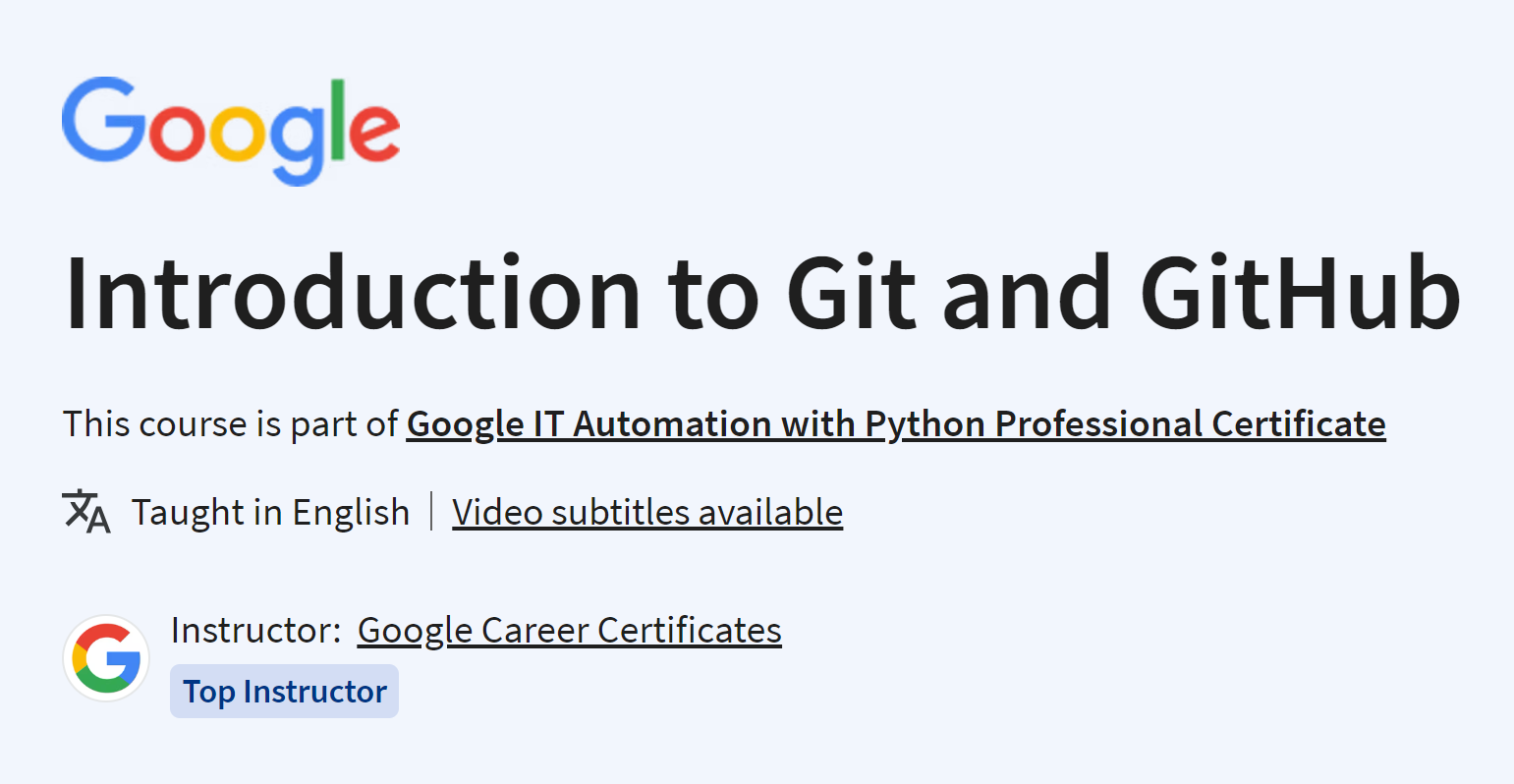
Introduction to Git and GitHub: Free Online Course by Google on Coursera
Are you learning Python, web development, data science, or software engineering? Understanding Git and GitHub is an essential step toward becoming a professional developer.
The Introduction to Git and GitHub course on Coursera, taught by Google Career Certificates, helps beginners understand version control, manage code changes, and collaborate on software projects. It is part of the Google IT Automation with Python Professional Certificate program.
Course Link: Introduction to Git and GitHub Course by Google
What Are Git and GitHub?
Before starting the course, let's understand these two important development tools.
Git is a distributed version control system that tracks changes in your files. It allows you to maintain a history of your code, compare changes, create branches, and restore previous versions when needed.
GitHub is an online platform for hosting Git repositories. Developers use it to share code, collaborate on projects, review changes, and contribute to open-source software.
Together, Git and GitHub make software development more organized and collaborative.
Course Overview
| Detail | Information |
|---|---|
| Course Name | Introduction to Git and GitHub |
| Platform | Coursera |
| Instructor | Google Career Certificates |
| Level | Beginner |
| Duration | Approximately 2 weeks at 10 hours per week |
| Modules | 4 |
| Learning Format | Self-paced online learning |
| Certificate | Shareable certificate, subject to course completion and enrollment conditions |
| Prerequisites | No prior experience required |
Course details and enrollment options may change. Check the official course page for the latest information.
What Will You Learn?
The course covers essential concepts and practical skills for managing software projects.
1. Introduction to Version Control
Learn why version control is important and how developers track changes in their code.
Topics include:
Understanding version control systems
Introduction to Git
Installing and configuring Git
Creating and cloning repositories
Tracking files and recording changes
Understanding commits and commit messages
2. Using Git Locally
Explore how to manage your code on your local computer.
You will learn about:
Checking changes before committing
Undoing changes and correcting commits
Renaming and removing files
Understanding Git history and HEAD
Creating and switching branches
Merging branches
Identifying and resolving merge conflicts
3. Working with Remote Repositories
Learn how Git works with GitHub and other remote repositories.
Topics include:
Creating a GitHub account and repository
Connecting local repositories to GitHub
Cloning remote repositories
Fetching and pulling changes
Pushing code to remote repositories
Understanding SSH and authentication
Working with remote branches
4. Collaboration with GitHub
Discover how developers work together on shared projects.
You will explore:
Forking repositories
Creating pull requests
Reviewing code changes
Managing issues
Squashing commits
Collaborating with other developers
Understanding continuous integration
These skills help you participate in real-world software development workflows.
Essential Git Commands for Beginners
Here are some basic Git commands to practise while taking the course.
# Check the installed Git version
git --version

# Configure your identity
git config --global user.name "Your Name"
git config --global user.email "you@example.com"

# Create a new repository
git init

# Check the current status
git status

# Stage changes
git add .

# Commit changes
git commit -m "Initial commit"

# Create a new branch
git switch -c feature

# View commit history
git log --oneline
These commands provide a starting point for tracking changes and managing projects. You can practise them in a local project before connecting it to GitHub.
Who Should Take This Course?
This course is suitable for:
Python developers: Track Python scripts, applications, and projects.
Students: Learn version control before starting internships or collaborative projects.
Data science learners: Manage notebooks, datasets metadata, and analysis code.
Machine learning engineers: Organize experiments and collaborate on model development code.
Web developers: Track changes across frontend and backend applications.
Open-source contributors: Learn the fundamentals of contributing to shared repositories.
Beginners: Start learning Git and GitHub without previous experience.
Why Should Python Developers Learn Git and GitHub?
If you are building Python projects, Git can help you maintain a history of your code and recover from mistakes. GitHub makes it easier to publish projects and share them with employers, collaborators, and the developer community.
For example, you could create a GitHub repository for a Python data analysis project containing:
Python source files
Jupyter notebooks
A README file
A requirements file
Project documentation
You can then track changes, maintain separate branches for new features, and share your work with others.
Building a collection of well-documented repositories can also help demonstrate your practical skills when applying for internships and developer roles.
Is the Introduction to Git and GitHub Course Free?
Coursera may offer free enrollment options, previews, trials, or other access arrangements depending on the course and your eligibility. Access to all graded assessments and the certificate may require payment or an eligible subscription.
Before enrolling, review the current pricing, available learning options, and certificate conditions on the official page.
Enroll here: Introduction to Git and GitHub Course by Google
How to Get the Most Out of This Course
Follow these steps to make your learning practical:
Install Git on your computer.
Create a GitHub account.
Practise every Git command as you learn it.
Create a repository for a small Python project.
Practise creating branches and merging changes.
Upload your project to GitHub.
Write a clear README explaining your project.
Explore open-source repositories and learn how contributors collaborate.
By practising alongside the lessons, you can develop skills that are useful beyond simply completing the course.
Final Thoughts
The Introduction to Git and GitHub course by Google Career Certificates is a useful starting point for anyone who wants to understand version control and collaborative software development.
Whether you are learning Python, machine learning, data science, or web development, Git and GitHub can help you manage projects more effectively and build a stronger developer portfolio.
If you are a beginner, start with the fundamentals, practise regularly, and gradually apply these tools to your own projects.
Start learning today: Introduction to Git and GitHub Course by Google
Explore more Python tutorials, programming resources, and learning guides on CLCODING.







 Posts


0 Comments:
Post a Comment