
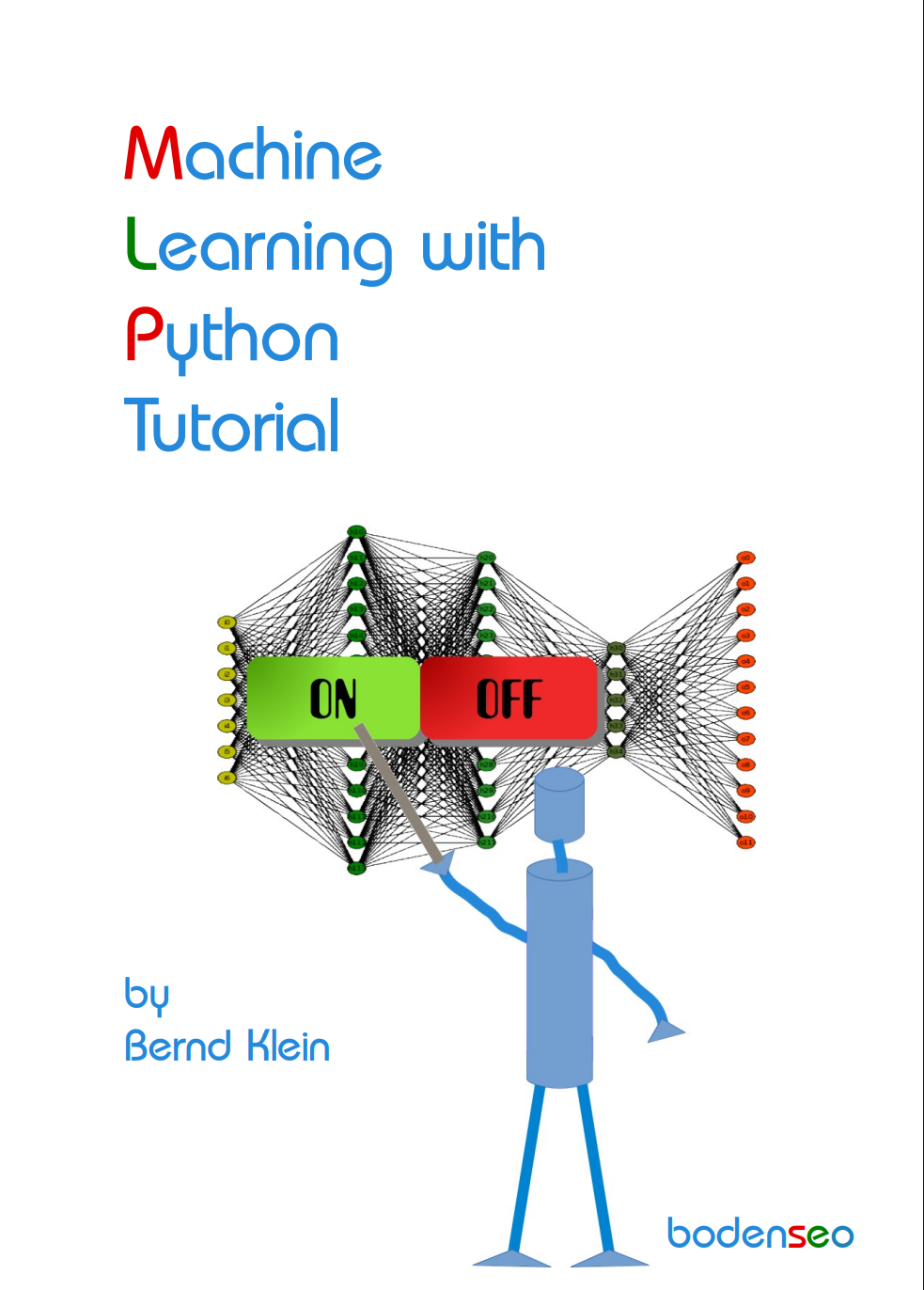
An Essential Guide for Aspiring Machine Learning Developers
If you're diving into the world of machine learning using Python, few resources are as practical, well-structured, and beginner-friendly as the book "Python Course: Machine Learning with Python" by Bernd Klein. This comprehensive guide walks readers through the foundations of ML with hands-on Python examples, leveraging popular libraries like Scikit-learn, NumPy, and TensorFlow.
Let’s take a tour through the key highlights and chapters of this excellent book:
📚 Core Machine Learning Concepts
The book kicks off with the terminology of Machine Learning, demystifying common terms like classifiers, features, labels, overfitting, and underfitting. This is essential for readers to build a strong theoretical base before diving into code.
📊 Data Representation and Visualization
Understanding data is a crucial first step in ML. Klein teaches how to represent and visualize data effectively using Python’s tools:
-
Loading the famous Iris dataset with Scikit-learn.
-
Creating scatterplot matrices to understand relationships between features.
-
Exploring digit datasets for image classification.
These sections blend theory with visualization techniques to make data exploration intuitive and insightful.
🤖 Classification Techniques
One of the standout sections of the book covers k-Nearest Neighbor (k-NN) — a simple yet powerful algorithm. You’ll learn:
-
How to apply k-NN on real datasets.
-
Visualize decision boundaries.
-
Understand the model’s accuracy using a confusion matrix.
🧠 Neural Networks from Scratch
Klein then deep dives into neural networks:
-
Building networks from scratch in Python.
-
Understanding the structure, weights, and bias nodes.
-
Implementing backpropagation and training procedures.
-
Adding Softmax activation functions for multi-class classification.
What sets this section apart is its focus on intuition and mathematics, providing clarity on how neural networks learn and adapt.
🧪 Experiments and Optimization
To enhance learning outcomes, the book includes:
-
Multiple training runs with varied parameters.
-
Networks with multiple hidden layers and epochs.
-
Building a neural network specifically tailored for the Digits dataset.
This iterative approach helps readers understand how tuning affects performance.
📦 Beyond Neural Networks
Klein doesn’t stop at neural networks. The book also explores:
-
Naive Bayes classifiers using Scikit-learn.
-
Regression trees and the math behind them.
-
Building regression decision trees from scratch.
-
Implementing models using Scikit-learn and TensorFlow.
These topics offer a wide spectrum of ML techniques, giving readers a broader understanding of model selection and application.
🔍 Why This Book Stands Out
✅ Clear explanations of both theory and code
✅ Real-world datasets used throughout
✅ Hands-on exercises with Scikit-learn and TensorFlow
✅ In-depth breakdown of Neural Networks from scratch
✅ Ideal for Python developers transitioning into ML
👨💻 Who Should Read This Book?
This book is perfect for:
-
Python programmers wanting to break into machine learning.
-
Students looking for a practical ML course companion.
-
Self-learners who prefer building ML models from the ground up.
📥 Where to Start?
To get the most out of the book, ensure you have a working Python environment (like Jupyter Notebook), and libraries like scikit-learn, numpy, matplotlib, and optionally TensorFlow installed.
Final Thoughts
"Python Course: Machine Learning with Python" by Bernd Klein is more than just a book — it’s a step-by-step learning journey. Whether you’re a curious beginner or a developer looking to sharpen your ML skills, this book delivers both depth and accessibility.
🧠 Ready to learn Machine Learning with Python the right way?
Start with Bernd Klein’s book and turn your Python skills into powerful ML applications.
📘 Get Your Free Copy Now:
👉 Download PDF – Python and Machine Learning by Bernd Klein










.png)


 Posts
Posts


0 Comments:
Post a Comment