Saturday, 5 July 2025

Book Review: Python Machine Learning By Example (4th Edition) by Yuxi (Hayden) Liu


Machine learning has evolved from academic theory to real-world necessity. Whether you're recommending products on e-commerce sites, filtering spam, detecting fraud, or even generating AI art—machine learning is everywhere.

In this landscape, "Python Machine Learning By Example (4th Edition)" by Yuxi (Hayden) Liu stands tall as a practical guide for anyone who wants to bridge the gap between theory and application.

๐Ÿ” What This Book Is About

This book is a hands-on guide to machine learning using Python, filled with real-world examples and best practices. Rather than overwhelming the reader with pure theory or mathematical derivations, Liu’s approach is refreshingly pragmatic—build something, learn by doing, and iterate.

With Python and libraries like Scikit-learn, TensorFlow, and XGBoost, you’ll walk through full machine learning pipelines, from data wrangling to model tuning and evaluation.


๐Ÿง  What You’ll Learn

Here's a glimpse of what the book covers:

✅ Core Topics:

  • Data preprocessing and exploratory data analysis (EDA)

  • Supervised learning: linear regression, decision trees, random forests, gradient boosting

  • Unsupervised learning: k-means, PCA

  • Deep learning with TensorFlow (DNNs and CNNs)

  • NLP: sentiment analysis with spaCy and Scikit-learn

  • Model evaluation and hyperparameter tuning with GridSearchCV

  • Reinforcement learning (a new addition to this edition)

  • Machine learning pipelines for production

Each chapter concludes with a project or mini-application, reinforcing the concepts in a meaningful way.


๐Ÿ’ก Why This Book Stands Out

1. Project-Based Learning

Rather than teaching algorithms in isolation, Liu walks you through projects like:

  • Predicting housing prices

  • Building spam filters

  • Classifying text sentiment

  • Stock trading with reinforcement learning

This format makes the learning experience practical and immersive.

2. Real-World Relevance

The examples aren’t toy problems. The book uses real datasets and introduces you to problems you might actually encounter in industry.

3. Readable & Beginner-Friendly

You don’t need a PhD in data science to follow along. Some basic Python knowledge and a willingness to learn are enough.

4. Updates in the 4th Edition

  • Updated code to Python 3.10+

  • TensorFlow 2.x support

  • Integration of new ML techniques and best practices

  • Streamlined examples with performance-focused improvements


๐Ÿงฐ Tools & Libraries Used

  • pandas, numpy, matplotlib

  • scikit-learn

  • xgboost

  • lightgbm

  • tensorflow

  • nltk, spaCy

  • gym (for reinforcement learning)

You’ll not only learn the syntax but understand how to use each library effectively in context.


๐Ÿ‘จ‍๐Ÿ’ป Who This Book Is For

  • Aspiring data scientists and ML engineers who want to go beyond theory

  • Python developers looking to get into AI

  • Students in applied ML or data science courses

  • Professionals needing a reference book for solving common ML tasks


⚖️ Pros and Cons

✅ Pros⚠️ Cons
Clear, concise, and practicalNot heavy on theory or mathematical proofs
Real-world datasets and use casesMay feel fast-paced for total beginners
Updated for the latest Python ecosystemSome examples could go deeper
Covers both ML & Deep LearningTensorFlow-focused, limited PyTorch usage

๐Ÿ Final Verdict

If you’re looking for a battle-tested, example-driven guide to machine learning in Python, this book is a gem. It’s not just about “what” ML is, but “how” to use it effectively—with real code and real outcomes.

Rating: ⭐⭐⭐⭐☆ (4.5/5)

Whether you’re new to machine learning or want a reliable desk reference, Python Machine Learning By Example delivers solid value.


๐Ÿ“š Where to Get It

๐Ÿ“ฆ Available on Amazon

Book Review: Elements of Data Science by Allen B. Downey (Free Book PDF)


If you're a beginner looking to dive into data science without getting lost in technical jargon or heavy theory, Elements of Data Science by Allen B. Downey is the perfect starting point.


First Impressions

Allen Downey is no stranger to making technical content accessible—his previous books (Think Python, Think Stats, Think Bayes) are widely respected in the open-source education world. In Elements of Data Science, he’s taken that accessibility a step further, crafting a practical, hands-on introduction aimed at complete beginners, including those with no prior programming experience.

And here’s the best part:
๐Ÿ“– The entire book is available for free on GitHub.


What You'll Learn

Rather than overwhelming you with abstract math or machine learning formulas, Downey focuses on helping readers do real work with real data. The book takes a structured and engaging path through:

  • ✅ Python fundamentals (variables, loops, lists, strings)

  • ๐Ÿ“Š Data analysis with Pandas and NumPy

  • ๐Ÿ“ˆ Data visualization

  • ๐Ÿ“ Simple regression and statistical inference

  • ⚖️ Case studies in fairness, ethics, and real-world decision-making


๐Ÿ” What Makes It Unique

  • ๐Ÿ““ Jupyter Notebooks: Each chapter is an interactive notebook. You can run the code on Google Colab, making it easy to experiment—even without installing anything.

  • ๐ŸŒˆ Full-color layout: Downey self-published this book in full color via Lulu, enhancing readability—especially for charts and syntax highlighting.

  • ๐Ÿ“Œ Real-world data: The book doesn’t just teach theory—it walks you through case studies like political alignment over time, and ethical issues in predictive policing algorithms.

  • ๐Ÿงฉ Compact but powerful: Instead of teaching all of Python or statistics, it teaches just enough to get you analyzing real data—fast.


Best For…

  • ๐Ÿง‘‍๐ŸŽ“ Students starting data science or Python from scratch

  • ๐ŸŽ“ Educators looking for interactive and free course material

  • ๐Ÿ‘จ‍๐Ÿ’ป Professionals transitioning into data roles who want a gentle, structured introduction

  • ๐Ÿ’ก Anyone who prefers hands-on learning over theory


๐Ÿงช What Could Be Better

  • The book avoids traditional programming exercises, which may feel limiting to those who want deeper computer science knowledge.

  • It focuses more on doing than on the why behind certain methods, which is great for beginners, but advanced readers may crave more theory.

Final Verdict

Rating: ★★★★★ (5/5)

Elements of Data Science is a rare gem in the world of open educational resources. It’s clear, practical, beginner-friendly, and fully free. Allen Downey proves once again that high-quality education doesn’t need a paywall—or a prerequisite.

If you're starting your journey in data science or teaching others how to, this book deserves a top spot on your reading list.


๐Ÿ“Ž Read it for free here:
๐Ÿ‘‰ https://allendowney.github.io/ElementsOfDataScience/


Python Coding challenge - Day 589| What is the output of the following Python Code?


Code Explanation:

1. Defining the Decorator-Like Function plus1
def plus1(f):
    def wrap(x): return f(x) + 1
    return wrap
plus1 is a function that takes another function f as an argument.

Inside it, wrap(x) is defined:

It calls f(x) and then adds 1 to the result.

plus1 returns wrap, which is a modified version of the original function.

Think of plus1 as a function enhancer that adds 1 to whatever the original function returns.

2. Creating a Function with a Lambda
f = plus1(lambda x: x * 3)
A lambda function (lambda x: x * 3) is created.
This lambda multiplies the input x by 3.
plus1 wraps it, creating a new function wrap(x) that returns:
(x * 3) + 1

3. Calling the Final Function
print(f(2))
Now let's compute:
lambda x: x * 3 → with x = 2 → 2 * 3 = 6
plus1 adds 1 → 6 + 1 = 7

Final Output
7

Python Coding challenge - Day 588| What is the output of the following Python Code?


Code Explanation:

 1. Defining the Decorator negate

def negate(f):
    def w(x): return -f(x)
    return w
negate(f) is a decorator function.

It takes a function f as input.

Inside it, w(x) is defined, which:

Calls f(x) (the original function),

Negates its result (i.e., multiplies it by -1).

Finally, it returns the wrapper function w.

 Purpose: This decorator flips the sign of any function’s output.

2. Applying the Decorator with @negate
@negate
def pos(x): return x + 5
This is shorthand for:

def pos(x): return x + 5
pos = negate(pos)
So, the original pos(x) which returned x + 5 is now wrapped.

The wrapped version will return -(x + 5) instead.

3. Calling the Decorated Function
print(pos(3))
This calls the decorated version of pos with input 3.
Internally:
pos(3) → w(3) → -f(3) → -(3 + 5) → -8

Final Output
-8

Python Coding Challange - Question with Answer (01050725)


Step-by-step Explanation:

  1. Original list:


    x = [1, 2, 3, 4, 5]
    0 1 2 3 4 ← indices
  2. Slice being replaced:
    x[1:4] refers to elements at index 1, 2, and 3, i.e.:


    [2, 3, 4]
  3. Replacement:
    You assign [20, 30] to that slice, replacing 3 elements with 2 elements. Python allows this, and the list will shrink by 1 element.

  4. New list after assignment:
    Replace [2, 3, 4] with [20, 30], resulting in:

    x = [1, 20, 30, 5]

✅ Final Output:


[1, 20, 30, 5]

This works because list slicing with assignment allows the replacement slice to be of different length — Python automatically resizes the list.

Python for Stock Market Analysis

https://pythonclcoding.gumroad.com/l/tsweo

Friday, 4 July 2025

Python Coding challenge - Day 586| What is the output of the following Python Code?


 Code Explanation:

Function Decorator Definition
def dec(f):
This defines a decorator function named dec.
A decorator is used to modify the behavior of another function.
It takes a function f as an argument.

Inner Wrapper Function
    def wrap(x): return f(x) + 2
Inside the decorator, another function wrap(x) is defined.
This function:
Calls the original function f(x)
Adds 2 to the result
It wraps the original function with new behavior.

Returning the Wrapper
    return wrap
The wrap function is returned.
So when dec is used, it replaces the original function with wrap.

Using the Decorator with @ Syntax
@dec
def fun(x): return x * 3
This applies the dec decorator to the function fun.
Equivalent to:
def fun(x): return x * 3
fun = dec(fun)
Now fun(x) actually runs wrap(x), which does f(x) + 2.

Calling the Decorated Function
print(fun(2))
fun(2) calls wrap(2)
Inside wrap(2):
f(2) → 2 * 3 = 6
6 + 2 = 8
So the final result is 8.

Final Output
8
The decorated version of fun(2) gives 8 instead of 6.
This shows how the decorator successfully modified the function.

Python Coding challenge - Day 587| What is the output of the following Python Code?


Code Explanation:

Function Decorator Definition
def add(f):
This defines a decorator function named add.
It accepts another function f as its argument.
The purpose is to modify or extend the behavior of f.

 Inner Wrapper Function
    def w(x): return f(x) + 10
Inside add, a new function w(x) is defined.
This wrapper function:
Calls f(x)
Then adds 10 to its result
So, it modifies the original function’s output.

Returning the Wrapper
    return w
The wrapper function w is returned.
So when add is used as a decorator, it replaces the original function with w.

Using the Decorator with @ Syntax
@add
def val(x): return x
The decorator @add is applied to the function val.
This is the same as:
def val(x): return x
val = add(val)
So, val(x) is now actually w(x), which returns x + 10.

Calling the Decorated Function
print(val(3))
val(3) is now w(3)
Inside w(3):
f(3) → original val(3) = 3
Then: 3 + 10 = 13

Final Output
13

The output of val(3) is 13, not just 3, because the decorator added 10 to it.

Thursday, 3 July 2025

Python Coding Challange - Question with Answer (01040725)


What's going on?

You're defining a variable x = 0 outside the function (global scope), and then trying to increment x inside the function.


What happens when you run this?

You'll get an error:

UnboundLocalError: local variable 'x' referenced before assignment

Why?

Python thinks x inside the function is a local variable, because you're assigning to it with x += 1. However, you're also trying to read its value before the assignment — and since there's no local x defined yet, Python throws an error.


How to fix it?

You can fix it by telling Python that x inside func() refers to the global x, using the global keyword:


x = 0
def func(): global x x += 1 print(x)
func()

๐ŸŸข Output:

1

Now x += 1 modifies the global variable x.


Key Concept:

When you assign to a variable inside a function, Python assumes it's local, unless you declare it as global or nonlocal.

100 Python Programs for Beginner with explanation 

https://pythonclcoding.gumroad.com/l/qijrws

Master Data Analysis with Python: NumPy, Matplotlib, and Pandas (FREE PDF)


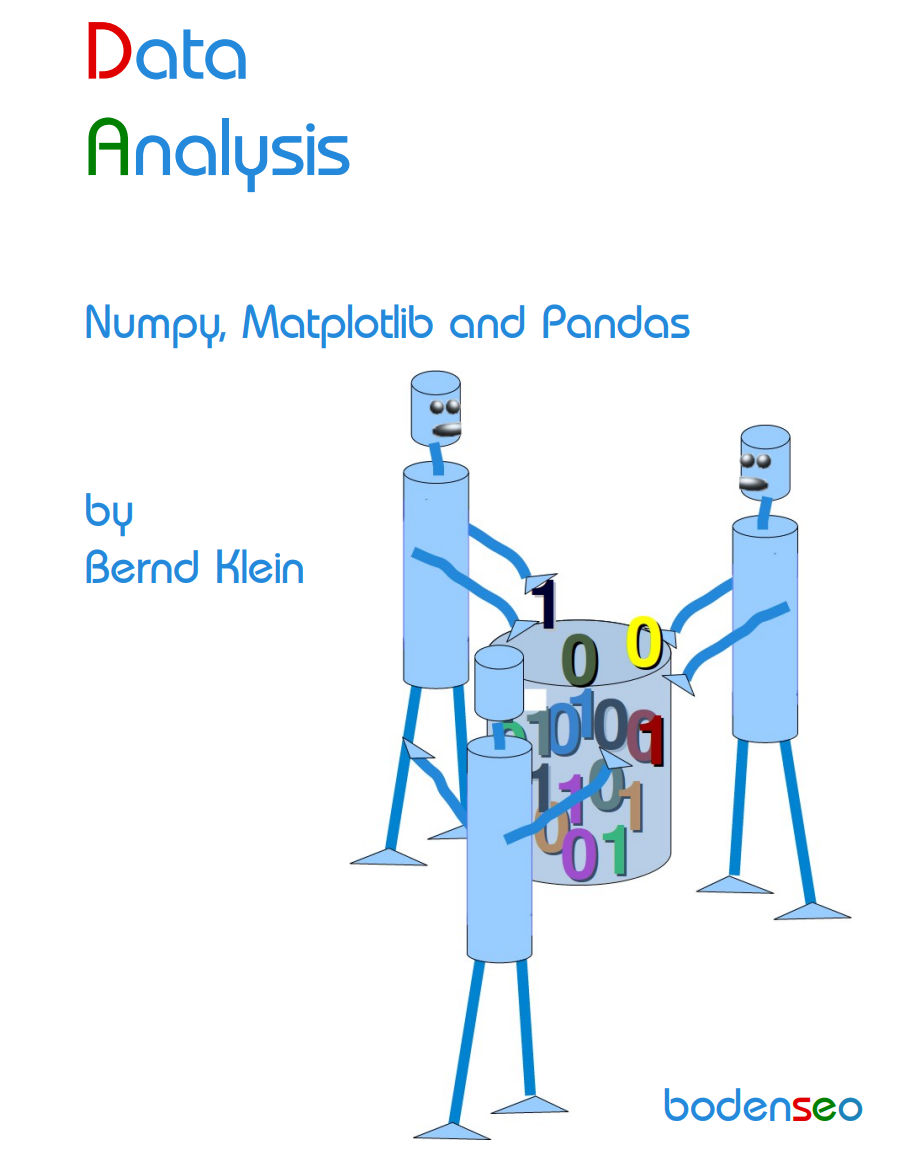
A Comprehensive Free Book by Bernd Klein

If you're looking to dive deep into data analysis using Python, then "Data Analysis with Python: NumPy, Matplotlib and Pandas" by Bernd Klein is a must-have in your digital library. This hands-on book teaches you the foundational and advanced concepts of three essential Python libraries: NumPy, Matplotlib, and Pandas — all at no cost.

๐Ÿ“ฅ Download the Free PDF Here:
๐Ÿ”— https://python-course.eu/books/bernd_klein_python_data_analysis_a4.pdf


๐Ÿ“˜ What’s Inside the Book?

The book is structured in a way that supports gradual learning. You’ll start with NumPy, then move to Matplotlib for data visualization, and finally master Pandas for structured data handling.


๐Ÿ”ข NumPy – Powerful Numerical Computing

  • Creating Arrays
    Learn how to construct and manipulate arrays, the backbone of scientific computing in Python.

  • Data Type Objects (dtype)
    Deep dive into NumPy’s data types and memory-efficient structures.

  • Numerical Operations
    Perform vectorized operations, element-wise functions, and linear algebra.

  • Array Manipulation
    Concatenate, flatten, reshape, and slice arrays like a pro.

  • Boolean Indexing & Matrix Math
    Apply logic to filter arrays and understand dot/cross product operations.

  • Synthetic Test Data
    Generate random data for testing models and analysis.


๐Ÿ“ˆ Matplotlib – Mastering Data Visualization

  • Plot Formatting
    Learn to format your plots, customize styles, and annotate points.

  • Subplots & GridSpec
    Create complex multi-panel plots using subplots() and GridSpec.

  • Histograms, Bar Plots & Contour Plots
    Visualize distributions and functions clearly.

  • Interactive Features
    Add legends, spines, ticks, and use fill_between() for shading areas.


๐Ÿผ Pandas – Elegant Data Manipulation

  • Data Structures: Series & DataFrames
    Learn the fundamentals of structured data in Pandas.

  • Accessing & Modifying Data
    Use .loc, .iloc, and conditional filters for efficient access.

  • GroupBy Operations
    Aggregate, summarize, and explore grouped data.

  • Handling NaN & Missing Values
    Learn strategies to manage incomplete datasets.

  • Reading/Writing CSVs and Excel
    Connect your analysis with external data sources easily.

  • Real-world Examples
    Understand concepts through "Expenses and Income" & "Net Income Method" examples.


๐Ÿง  Who Is This Book For?

Whether you're a beginner in data science or a Python developer looking to strengthen your data wrangling skills, this book offers something valuable:

✅ Data Analysts
✅ Data Science Students
✅ Researchers
✅ Finance Professionals
✅ Python Enthusiasts


๐ŸŽ“ Why You Should Read This Book

  • Authored by Bernd Klein, an experienced educator and Python expert

  • Rich in code examples and exercises

  • Offers real-world use cases and problem-solving approaches

  • Fully free and downloadable PDF

  • Structured for self-paced learning


๐Ÿ“ฅ Get Your Free Copy Now!

Don’t miss the chance to level up your Python skills in data analysis.

๐Ÿ”— Download the PDF - Data Analysis with Python by Bernd Klein


๐Ÿ‘จ‍๐Ÿ’ป Powered by CLCODING

Learn Python, Build Projects, and Grow Daily.

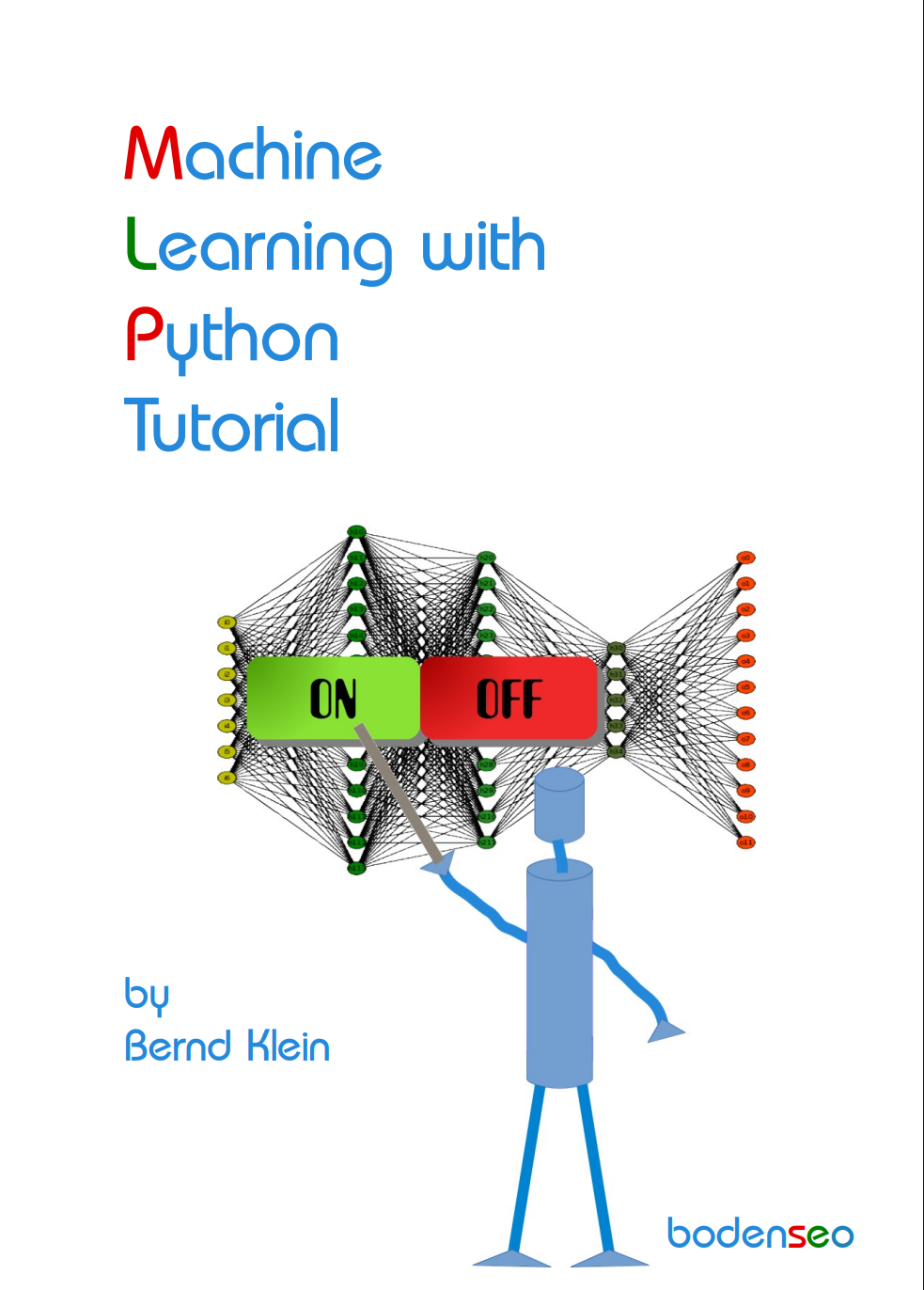
Mastering Machine Learning with Python by Bernd Klein (Free PDF)


An Essential Guide for Aspiring Machine Learning Developers

If you're diving into the world of machine learning using Python, few resources are as practical, well-structured, and beginner-friendly as the book "Python Course: Machine Learning with Python" by Bernd Klein. This comprehensive guide walks readers through the foundations of ML with hands-on Python examples, leveraging popular libraries like Scikit-learn, NumPy, and TensorFlow.

Let’s take a tour through the key highlights and chapters of this excellent book:


๐Ÿ“š Core Machine Learning Concepts

The book kicks off with the terminology of Machine Learning, demystifying common terms like classifiers, features, labels, overfitting, and underfitting. This is essential for readers to build a strong theoretical base before diving into code.


๐Ÿ“Š Data Representation and Visualization

Understanding data is a crucial first step in ML. Klein teaches how to represent and visualize data effectively using Python’s tools:

  • Loading the famous Iris dataset with Scikit-learn.

  • Creating scatterplot matrices to understand relationships between features.

  • Exploring digit datasets for image classification.

These sections blend theory with visualization techniques to make data exploration intuitive and insightful.


๐Ÿค– Classification Techniques

One of the standout sections of the book covers k-Nearest Neighbor (k-NN) — a simple yet powerful algorithm. You’ll learn:

  • How to apply k-NN on real datasets.

  • Visualize decision boundaries.

  • Understand the model’s accuracy using a confusion matrix.


๐Ÿง  Neural Networks from Scratch

Klein then deep dives into neural networks:

  • Building networks from scratch in Python.

  • Understanding the structure, weights, and bias nodes.

  • Implementing backpropagation and training procedures.

  • Adding Softmax activation functions for multi-class classification.

What sets this section apart is its focus on intuition and mathematics, providing clarity on how neural networks learn and adapt.


๐Ÿงช Experiments and Optimization

To enhance learning outcomes, the book includes:

  • Multiple training runs with varied parameters.

  • Networks with multiple hidden layers and epochs.

  • Building a neural network specifically tailored for the Digits dataset.

This iterative approach helps readers understand how tuning affects performance.


๐Ÿ“ฆ Beyond Neural Networks

Klein doesn’t stop at neural networks. The book also explores:

  • Naive Bayes classifiers using Scikit-learn.

  • Regression trees and the math behind them.

  • Building regression decision trees from scratch.

  • Implementing models using Scikit-learn and TensorFlow.

These topics offer a wide spectrum of ML techniques, giving readers a broader understanding of model selection and application.


๐Ÿ” Why This Book Stands Out

✅ Clear explanations of both theory and code
✅ Real-world datasets used throughout
✅ Hands-on exercises with Scikit-learn and TensorFlow
✅ In-depth breakdown of Neural Networks from scratch
✅ Ideal for Python developers transitioning into ML


๐Ÿ‘จ‍๐Ÿ’ป Who Should Read This Book?

This book is perfect for:

  • Python programmers wanting to break into machine learning.

  • Students looking for a practical ML course companion.

  • Self-learners who prefer building ML models from the ground up.


๐Ÿ“ฅ Where to Start?

To get the most out of the book, ensure you have a working Python environment (like Jupyter Notebook), and libraries like scikit-learn, numpy, matplotlib, and optionally TensorFlow installed.


Final Thoughts
"Python Course: Machine Learning with Python" by Bernd Klein is more than just a book — it’s a step-by-step learning journey. Whether you’re a curious beginner or a developer looking to sharpen your ML skills, this book delivers both depth and accessibility.


๐Ÿง  Ready to learn Machine Learning with Python the right way?
Start with Bernd Klein’s book and turn your Python skills into powerful ML applications.

๐Ÿ“˜ Get Your Free Copy Now:
๐Ÿ‘‰ Download PDF – Python and Machine Learning by Bernd Klein

Wednesday, 2 July 2025

Python Coding challenge - Day 585| What is the output of the following Python Code?


Code Explanation:

 1. Define a Decorator Function
def decorator(f):
    def wrapper(x):
        return f(x) + 1
    return wrapper
decorator is a higher-order function: it takes a function f as input.
Inside it, wrapper(x) is defined, which:
Calls the original function f(x).
Adds 1 to the result.
wrapper is returned — this becomes the new version of the function.

2. Apply Decorator Using @ Syntax
@decorator
def f(x):
    return x * 2
This is syntactic sugar for:
def f(x):
    return x * 2
f = decorator(f)  # f now refers to wrapper(x)
So f is now replaced by wrapper(x).

3. Call the Decorated Function
print(f(3))
Since f is now wrapper, here's what happens:
wrapper(3) is called.
Inside wrapper:
f(3) is evaluated as 3 * 2 = 6.
6 + 1 = 7 is returned.

Final Output
7

Download Book - 500 Days Python Coding Challenges with Explanation

Python Coding challenge - Day 584| What is the output of the following Python Code?


Code Explanation:

Function Definition: outer()
def outer():
This defines a function named outer.
Inside this function, we will build a list of functions and return them.

Initialize List to Store Functions
    funcs = []
funcs is initialized as an empty list.
This list will hold the inner functions we define in the loop.

For Loop: Create Functions Dynamically
    for i in range(3):
This loop will iterate 3 times with i taking values 0, 1, and 2.

Define inner Function with Default Argument
        def inner(i=i):
            return i * 2
A new function inner is defined on each loop iteration.
Key point: i=i is a default argument, which captures the current value of i at that point in the loop.
Without this, all inner functions would end up using the final value of i after the loop ends (commonly a bug).
The function returns i * 2.

Append Each Function to the List
        funcs.append(inner)
The current version of inner is added to the funcs list.
Now funcs will hold 3 separate functions, each with its own captured i.

Return the List of Functions
    return funcs
Once the loop is done, we return the list of 3 inner functions.

Unpack the Returned Functions
a, b, c = outer()
outer() returns a list of 3 functions.
These are unpacked into a, b, and c, which now each hold one of the inner functions.

Call the Functions and Print Results
print(a(), b(), c())
This calls each function and prints their returned values.
Let's see what each function does:
a() → First iteration → i = 0 → returns 0 * 2 = 0
b() → Second iteration → i = 1 → returns 1 * 2 = 2
c() → Third iteration → i = 2 → returns 2 * 2 = 4

Final Output
0 2 4

Python Coding Challange - Question with Answer (01030725)


Explanation

List x:

Index: 0 1 2 3 4
Value: 1 2 3 4 5

Slicing: x[1:-1]

  • 1 is the start index → starts from index 1 → value 2

  • -1 is the end index (exclusive) → goes up to index -1 → value 5, but not included

So, you're slicing from index 1 up to but not including index -1.


So the slice is:


[2, 3, 4]

Output:


[2, 3, 4]

Python for Software Testing: Tools, Techniques, and Automation

https://pythonclcoding.gumroad.com/l/tcendf

๐Ÿ“š Free Technology & Programming Books You Can Download Now!


If you're passionate about programming, AI, data, or automation — this is your lucky day! ๐ŸŽ‰ We’ve curated a powerful list of FREE books that cover everything from Python to Deep Learning, Excel automation, and modern statistics. These books are 100% free to access via CLCODING, and perfect for learners, developers, and researchers alike.


๐Ÿง  1. Deep Learning with Python, Second Edition by Franรงois Chollet

A must-read from the creator of Keras, this book offers deep insights into building neural networks using TensorFlow and Python.


๐Ÿงช 2. The Little Book of Deep Learning by Franรงois Fleuret

A concise and mathematical introduction to deep learning — perfect for theory lovers!


๐Ÿ— 3. Clean Architectures in Python

Learn how to structure large Python applications with clean architecture principles for scalability and testing.


๐Ÿ 4. Learning Python, 5th Edition

This comprehensive guide is ideal for beginners and intermediate Python learners.


๐Ÿงฎ 5. Algorithms for Decision Making

Great for AI, ML, and data enthusiasts — this book walks you through decision theory and algorithms.


๐Ÿ“Š 6. Python for Excel: A Modern Environment for Automation and Data Analysis

A practical guide to using Python as a powerful alternative to Excel macros.


๐Ÿ“ˆ 7. Introducing Microsoft Power BI by Alberto Ferrari and Marco Russo

Learn Power BI from the masters — excellent for business intelligence and dashboard building.


๐Ÿ“‰ 8. Think Stats (3rd Edition) by Allen B. Downey

Explore statistics with Python. This book is great for students and analysts.


๐Ÿ“ 9. Introduction to Modern Statistics (2e)

An open-source stats book for data science, statistics, and machine learning.


๐Ÿ‘จ‍๐Ÿ’ป 10. Think Python (3rd Edition) by Allen B. Downey

A hands-on introduction to Python programming — perfect for first-time coders.


๐Ÿค– 11. AI Value Creators: Beyond the Generative AI Mindset

Unlock the true value of AI — beyond just chatbots and art generation.


๐Ÿ“ฅ Download, Learn & Grow — for FREE!
No paywalls, no catch — just pure knowledge.
Save this list. Share it. Level up your skills with these free, high-quality tech books.


๐Ÿ”— More free resources & updates at clcoding.com
Follow us on all platforms for regular updates. ๐Ÿš€


Python Coding challenge - Day 582| What is the output of the following Python Code?


 Code explanation:

Line 1: Class Definition
class A:
This defines a new class named A.
A class is a blueprint for creating objects in Python.

Line 2: Class Variable Declaration
val = 1
Inside the class A, a class variable val is defined and initialized to 1.
This variable is shared across all instances of the class unless overridden by an instance variable.
Think of this as: A.val = 1

Line 3: Constructor Method
def __init__(self):
This is the constructor method, which is automatically called when a new object of class A is created.
self refers to the instance being created.

Line 4: Instance Variable Modification
self.val += 1
This line tries to increment the value of self.val by 1.
Since self.val doesn't exist yet as an instance variable, Python looks up to the class variable A.val, which is 1.
Then it creates an instance variable self.val and sets it to 1 + 1 = 2.

Internally:
self.val = self.val + 1
# self.val is not found → looks up A.val → finds 1 → sets self.val = 2

Line 5: Object Creation
a = A()
An object a of class A is created.
This automatically calls the __init__ method, which sets a.val = 2.

Line 6: Output
print(a.val)
Prints the value of the instance variable val of object a, which is 2.

Final Output:
2

Download Book - 500 Days Python Coding Challenges with Explanation

Python Coding challenge - Day 583| What is the output of the following Python Code?


Code Explanation:

Line 1: Class Definition
class A:
This defines a new class A.

Line 2: Class Variable Declaration
x = 5
A class variable x is defined and initialized to 5.
This is shared across all instances unless overridden.

At this point:
A.x == 5

Line 3–4: Constructor (__init__) Method
def __init__(self):
    self.x = A.x + 1
When a new object of class A is created, the constructor runs.
self.x = A.x + 1 sets an instance variable x for that object.
A.x is 5, so:
self.x = 5 + 1 = 6

This does not modify the class variable A.x — it creates a new instance variable x.

Line 5: Object Creation
a = A()
An object a of class A is created.
During initialization, self.x is set to 6.

Line 6: Print a.x
print(a.x)
This prints the instance variable x of object a, which is 6.

Output:
6

Line 7: Print A.x
print(A.x)
This prints the class variable x, which is still 5.

Output:
5

Final Output:
6
5


Download Book - 500 Days Python Coding Challenges with Explanation

Programming Foundations with JavaScript, HTML and CSS


Programming Foundations with JavaScript, HTML and CSS: Build a Solid Start in Web Development

Introduction

In the ever-evolving world of technology, web development is one of the most in-demand skills across the globe. Whether you're aspiring to become a front-end developer, web designer, or software engineer, understanding the core technologies that power the web—JavaScript, HTML, and CSS—is essential. The "Programming Foundations with JavaScript, HTML and CSS" course, offered by Duke University through Coursera, is a beginner-friendly introduction that lays the groundwork for anyone looking to enter the field of web development or software engineering.

This course is the first step in Duke University’s larger specialization on Java programming and software engineering fundamentals. It’s designed for learners with no prior coding experience, making it ideal for absolute beginners.

Why This Course Stands Out

Unlike traditional programming courses that dive straight into syntax and functions, this course emphasizes foundational problem-solving skills and visual learning. By using JavaScript in combination with HTML and CSS, students don’t just learn to code—they learn how to think like a developer and build interactive applications that run in the browser.

The course is designed to be hands-on and engaging. You’ll write code, build real projects, and develop the mindset required to tackle more complex programming challenges later on.

Core Concepts Covered

1. Introduction to Programming Concepts

The course starts with the basics of programming, including:

  • Variables and data types
  • Conditional statements (if/else)
  • Loops (while and for)
  • Functions and modular coding

These fundamental concepts are introduced using JavaScript, one of the most versatile and beginner-friendly programming languages.

2. Building Web Pages with HTML and CSS

In addition to JavaScript, you'll also learn the structure and design of web pages using:

  • HTML (HyperText Markup Language) to create structure
  • CSS (Cascading Style Sheets) to add styling, layout, and responsiveness

This helps learners understand how JavaScript interacts with HTML/CSS to create dynamic web content.

3. Making Interactive Applications

With the basics in place, you’ll begin building interactive programs, such as:

  • Simple games and visual effects
  • Applications that respond to user input
  • Pages that change dynamically using JavaScript and the DOM (Document Object Model)

This makes the learning experience fun and immediately applicable.

4. Debugging and Problem Solving

The course emphasizes a structured approach to:

  • Debugging and fixing errors
  • Writing clear, understandable code
  • Breaking down complex problems into manageable steps

These skills are crucial for becoming an effective programmer.

What You Will Learn

By the end of the course, you will be able to:

  • Write basic programs using JavaScript syntax and logic
  • Structure web pages using HTML and style them with CSS
  • Make web pages interactive by manipulating the DOM with JavaScript
  • Build and test small, interactive applications
  • Think algorithmically and apply logic to solve programming problems
  • Prepare for more advanced programming courses in Java or web development

Hands-On Projects

The course includes engaging mini-projects such as:

  • Creating a simple web-based game
  • Developing a program that responds to user input
  • Building a dynamic webpage with real-time updates

These projects give learners immediate feedback and a sense of accomplishment.

Who Should Take This Course?

This course is ideal for:

  • Absolute beginners with no prior programming knowledge
  • High school or college students interested in coding
  • Career changers transitioning into tech
  • Aspiring web developers or software engineers
  • Anyone curious about how websites and interactive apps are built

Learning Experience and Format

The course is delivered entirely online through Coursera, with features such as:

  • Pre-recorded video lectures
  • Interactive coding exercises within the browser
  • Quizzes to test your understanding
  • Peer discussions and assignments for collaborative learning
  • It’s self-paced, so learners can progress based on their own schedules.

Foundation for Future Learning

By mastering the basics in this course, you will be well-prepared to:

  • Advance to more complex JavaScript frameworks like React or Angular
  • Dive deeper into software engineering with Java, Python, or C++
  • Take part in web development bootcamps or full-stack development courses
  • Start building a professional portfolio with your own projects

Join Now : Programming Foundations with JavaScript, HTML and CSS

Conclusion

The "Programming Foundations with JavaScript, HTML and CSS" course offers a fun, practical, and beginner-friendly introduction to the world of coding. With a strong focus on logical thinking, hands-on projects, and real-world relevance, it gives learners a solid foundation for their journey into software development.

Whether you're planning a career in tech or just want to understand the digital world around you, this course is the perfect place to start.


Mastering Data Analysis in Excel


Mastering Data Analysis in Excel: Turn Spreadsheets into Strategic Insights

Introduction

In today’s data-driven world, the ability to analyze data effectively is a valuable skill across nearly every industry. While there are many tools available for data analysis, Microsoft Excel remains one of the most widely used and accessible platforms. The course “Mastering Data Analysis in Excel,” offered by Duke University on Coursera, is designed to teach learners how to harness the full power of Excel to draw actionable insights from data.

This course goes beyond simple formulas and charts—it teaches a systematic, analytical approach to solving real-world business problems using Excel. Whether you’re a beginner in data analytics or a business professional looking to sharpen your skills, this course equips you to make data-informed decisions with confidence.

What the Course Covers

This course focuses on data analysis techniques, problem-solving strategies, and Excel-based tools for making informed business decisions. It's not just about Excel features—it's about how to use them in the context of structured analysis. You’ll learn how to frame analytical questions, clean and structure data, run simulations, test hypotheses, and present conclusions—all from within Excel.

It provides a balance between theoretical concepts and practical applications, ensuring you can not only use Excel tools but also interpret and communicate the results effectively.

Key Topics Explored

1. The Analytical Problem-Solving Framework

The course begins by introducing a proven framework for structured problem solving. You’ll learn how to:

  • Frame business problems as data analysis challenges
  • Break complex issues into manageable components
  • Use logic trees and decision tools

This foundation sets the tone for more advanced analysis throughout the course.

2. Excel Functions and Data Tools

You’ll gain deep familiarity with Excel’s advanced functions and features:

  • Lookup functions (VLOOKUP, INDEX-MATCH)
  • Logical and statistical functions
  • Pivot tables and filtering tools
  • Data validation and conditional formatting

These tools help you prepare and structure your data for meaningful analysis.

3. Regression and Forecasting

One of the course highlights is how it teaches regression analysis and predictive modeling using Excel:

  • Perform simple and multiple linear regression
  • Use Excel’s built-in tools (Data Analysis ToolPak) for model creation
  • Interpret coefficients and residuals
  • Understand how to use models for business forecasting

4. Hypothesis Testing and Scenario Analysis

You’ll learn how to use statistical reasoning to make decisions, including:

  • Confidence intervals
  • p-values and significance levels
  • What-if analysis
  • Scenario manager and Goal Seek tools

These methods are critical for evaluating alternatives and making informed recommendations.

5. Communicating Results

Good analysis is useless if it can’t be understood. This course emphasizes:

  • Data visualization with charts and graphs
  • Designing effective dashboards
  • Writing clear executive summaries
  • Presenting insights and recommendations

What You Will Learn

By completing this course, you’ll be able to:

  • Apply structured thinking to business problems
  • Use Excel as a powerful analytical tool
  • Perform regression analysis and interpret statistical output
  • Evaluate scenarios and make data-based decisions
  • Create compelling visuals and communicate results effectively
  • Bridge the gap between raw data and business strategy

Why Excel for Data Analysis?

While there are more advanced tools like Python, R, or Power BI, Excel remains a key platform for data work because:

  • It’s widely available and user-friendly
  • Many professionals already use it daily
  • It handles most analytical tasks without needing programming
  • It's ideal for quick modeling and prototyping

Learning to master Excel ensures you're able to perform robust analysis using tools you already have access to.

Who Should Take This Course?

This course is ideal for:

  • Business professionals and managers
  • Aspiring data analysts
  • MBA students and undergraduates
  • Entrepreneurs who want to use data to drive growth
  • Anyone with basic Excel knowledge looking to go deeper into analytics

You don’t need a background in statistics—just a willingness to learn and apply a structured approach to problem-solving.

Course Structure and Learning Experience

The course includes:

  • Video lectures with real-life case examples
  • Practice exercises using Excel workbooks
  • Quizzes to test your understanding
  • Peer discussion forums for collaboration
  • A final project to apply your skills to a real-world problem

You’ll complete the course with a portfolio-worthy analysis and practical Excel expertise.

Real-World Applications

After completing this course, you'll be ready to:

  • Analyze customer data to improve sales and marketing
  • Forecast revenue and plan budgets
  • Evaluate business performance across departments
  • Support data-driven decision-making in meetings
  • Automate reporting and streamline data workflows

Whether you’re in finance, marketing, operations, or management, the skills gained here will elevate your value as a data-literate professional.

Join Now : Mastering Data Analysis in Excel

Conclusion

The "Mastering Data Analysis in Excel" course is more than just a spreadsheet tutorial—it’s a comprehensive guide to analytical thinking and data-driven decision-making. It empowers you to use Excel not just as a tool, but as a platform for insight and strategy.

If you want to take your Excel skills to the next level and become a more informed, effective decision-maker in your career, this course is the ideal place to start.


Behavioral Finance


Behavioral Finance: Understanding the Psychology Behind Financial Decisions

Introduction

Traditional finance theories assume that investors are rational, markets are efficient, and decisions are made based purely on logic and data. However, in the real world, people often make financial decisions influenced by emotions, biases, and mental shortcuts. This is where Behavioral Finance comes in—an interdisciplinary field that merges finance, psychology, and economics to better understand how people actually behave when it comes to money.

The Behavioral Finance course, offered by Yale University and taught by renowned economist Robert Shiller, explores the psychological factors that influence financial markets, investment strategies, and economic policies. It’s a must for investors, analysts, students, and anyone interested in why people make irrational financial choices—and how those choices shape global markets.

What is Behavioral Finance?

Behavioral Finance challenges the traditional belief that investors always act rationally. It examines how real human behavior—complete with cognitive biases, emotions, and heuristics—affects decision-making in the financial world. This field provides insights into market anomalies, bubbles, crashes, and even personal financial behavior.

By understanding the underlying psychological mechanisms, students can gain a deeper perspective on how individuals and institutions operate in the world of finance.

What the Course Covers

This course takes a deep dive into the emotional and psychological dimensions of investing and market behavior. It introduces theories, research findings, and practical examples that explain phenomena like overconfidence, loss aversion, herd behavior, and market irrationality.

It doesn’t just present ideas—it connects them to real-world market events, from housing bubbles to stock market crashes, making the learning engaging and grounded in reality.

Key Topics Explored

Here are some of the core concepts you’ll study in the Behavioral Finance course:

1. Psychology of Decision Making

You’ll explore how people make financial decisions and the mental shortcuts they use. Topics include:

  • Prospect theory
  • Risk perception
  • Framing effects
  • Mental accounting

2. Cognitive Biases in Finance

The course unpacks several well-documented biases that lead to irrational behavior:

  • Overconfidence bias
  • Anchoring
  • Confirmation bias
  • Loss aversion

3. Investor Behavior and Market Anomalies

Why do people follow the herd even when it’s irrational? You'll learn about:

  • Herd behavior and social contagion
  • Speculative bubbles and crashes
  • Mispricing of assets

4. Behavioral Asset Pricing

The course explores how behavioral factors can influence asset valuation beyond traditional models like CAPM, including:

  • Sentiment-based pricing
  • Role of narrative economics

5. Implications for Policy and Regulation

Behavioral finance also has critical policy implications. You’ll study:

  • How behavioral insights inform financial regulation
  • The role of behavioral nudges
  • Strategies for reducing systemic risk

What You Will Learn

By the end of this course, you will:

  • Understand the psychological foundations of financial decision-making
  • Identify common cognitive biases that affect investors and markets
  • Analyze real-world market events using behavioral finance theories
  • Gain insight into the causes of market bubbles and crashes
  • Explore how emotions and narratives influence market trends
  • Learn how behavioral insights can be used in public policy, investing, and personal finance

Who Should Take This Course?

This course is ideal for:

  • Finance and economics students
  • Investors and asset managers
  • Policy makers and regulators
  • Behavioral science enthusiasts
  • Business professionals looking to understand market dynamics
  • Anyone curious about the intersection of psychology and finance

Taught by a Nobel Laureate

One of the course’s standout features is that it’s taught by Professor Robert J. Shiller, a Nobel Prize-winning economist and one of the pioneers of Behavioral Finance. His ability to blend academic rigor with real-world relevance makes the course both intellectually stimulating and practical.

Real-World Applications

Behavioral finance isn’t just theory—it’s highly applicable in many areas:

  • Investing: Recognize and mitigate your own biases
  • Advising clients: Help clients avoid emotional pitfalls
  • Policy-making: Design smarter regulations and public programs
  • Risk management: Understand how group behavior amplifies risk
  • Marketing and pricing: Learn how perception shapes value

Course Format and Structure

The course includes:

  • Engaging lecture videos by Prof. Shiller
  • Real-world case studies and historical market analysis
  • Quizzes to reinforce key concepts
  • Optional assignments for deeper exploration
  • Peer discussion forums to share insights

You can learn at your own pace, making it ideal for working professionals or students balancing other commitments.

Why Behavioral Finance Matters Today

In a world increasingly driven by rapid information, volatile markets, and global crises, understanding the human side of finance is more important than ever. Behavioral finance offers critical tools for interpreting market behavior, predicting trends, and making better financial decisions—both personally and professionally.

Join Now : Behavioral Finance

Conclusion

The Behavioral Finance course is not just about understanding how markets function—it's about understanding how people function within those markets. It reveals the psychological forces that drive financial decisions and empowers learners to think more critically and act more wisely in the financial world.


Popular Posts

Categories

100 Python Programs for Beginner (119) AI (257) Android (25) AngularJS (1) Api (7) Assembly Language (2) aws (30) Azure (10) BI (10) Books (262) Bootcamp (11) C (78) C# (12) C++ (83) Course (87) Coursera (300) Cybersecurity (31) data (6) Data Analysis (32) Data Analytics (22) data management (15) Data Science (356) Data Strucures (17) Deep Learning (161) Django (16) Downloads (3) edx (21) Engineering (15) Euron (30) Events (7) Excel (19) Finance (10) flask (4) flutter (1) FPL (17) Generative AI (73) Git (10) Google (51) Hadoop (3) HTML Quiz (1) HTML&CSS (48) IBM (42) IoT (3) IS (25) Java (99) Leet Code (4) Machine Learning (296) Meta (24) MICHIGAN (5) microsoft (11) Nvidia (8) Pandas (14) PHP (20) Projects (33) pytho (1) Python (1342) Python Coding Challenge (1135) Python Mathematics (1) Python Mistakes (51) Python Quiz (503) Python Tips (5) Questions (3) R (72) React (7) Scripting (3) security (4) Selenium Webdriver (4) Software (19) SQL (49) Udemy (18) UX Research (1) web application (11) Web development (8) web scraping (3)

Followers

Python Coding for Kids ( Free Demo for Everyone)